Administrators of Business Activity Monitoring (BAM) definitions use the out-of-the-box BAM Management utility tool (BM.exe) to manage and maintain all aspects of the BAM infrastructure.
You can use the BAM utility to perform the following tasks:
Consume BAM definition and BAM configuration XML as input. The BAM definition XML or XLS files define the data to track and aggregate and the business end user’s view on the tracking data. The BAM configuration XML mandates where to deploy the infrastructure, such as the server name, database name, and other database settings.
Deploy the run-time infrastructure on the server, including the BAM Primary Import database, BAM Star Schema database, BAM Analysis database, and corresponding Data Transformation Services (DTS) packages. The following items are created during this step:
BAM Primary Import database
BAM Star Schema database
BAM Archive database
BAM Analysis database
You can learn more about this command-line tool in one of my previous posts: BAM Management Utility Commands – bm.exe. Nevertheless, despite being a powerful tool that works well, it is still an old command-line tool.
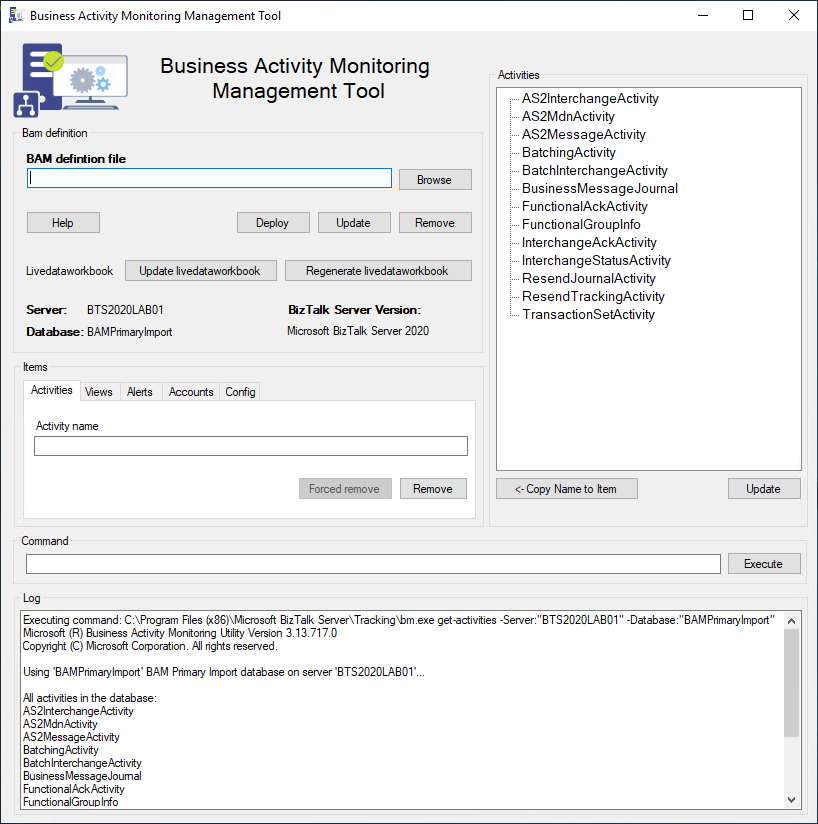
BizTalk Business Activity Monitoring Management Utility Tool is a Windows Application tool that works on top of the BM.exe to modernize and simplify its use. It is the equivalent of the BAM Management utility (BM.exe) tool with a GUI.
In this new version we:
Tried to modernize the layout of the tool by adding a picture and some other minor adjustments.
Fix some minor issues getting the correct version of the product – we removed the drop-down box, and now we are getting this info directly from the environment itself.
Tested in BizTalk Server 2020.
Credits
Rikard Alard, was the original creator of this tool.
Diogo Formosinho | Linkedin | Member of my team, and that help me migrate this tool and add a more modern look.
Download
THIS TOOL IS PROVIDED “AS IS”, WITHOUT WARRANTY OF ANY KIND.
You can download the BizTalk Business Activity Monitoring Management Utility Tool from GitHub here:
The full 7.3 version is complete with the release of v.7.3.1. This was a massive work of adding new shapes of new services that appear on Azure and changing the existing one with the new version of the shapes. Work is done and I hope you enjoy it!
What’s new in this version?
This is the list of changes and additions present in this release:
New shapes on MIS Azure Stencils, MIS Azure Additional or Support Stencils, MIS Developer Stencils, and MIS Security and Governance packages: add a considerable amount of new shapes of new services that appear on Azure has both changing the existing one with their new layout.
Move old versions of the shape layout to MIS Azure Old Versions package.
New shapes on MIS AI and Machine Learning Stencils: several new shapes add it to this package with several Cognitive Services.
New shapes on Microsoft Integration Stencils: some new shapes add it to this package describing Schemas, Maps, Aggrements, Partners, Assemblies and so on.
Lock the aspect ratio of the new stencil icons: This was a requested made that can be very handly to protects against accidental resizing with another shape aspect.
SVG files: new SVG files added.
Microsoft Integration, Azure, Power Platform, Office 365 and much more Stencils Pack
Microsoft Integration, Azure, Power Platform, Office 365 and much more Stencils Pack it’s a Visio package that contains fully resizable Visio shapes (symbols/icons) that will help you to visually represent On-premise, Cloud or Hybrid Integration and Enterprise architectures scenarios (BizTalk Server, API Management, Logic Apps, Service Bus, Event Hub…), solutions diagrams and features or systems that use Microsoft Azure and related cloud and on-premises technologies in Visio 2016/2013:
BizTalk Server
Microsoft Azure
Integration
Integration Service Environments (ISE)
Logic Apps and Azure App Service in general (API Apps, Web Apps, and Mobile Apps)
Azure API Management
Messaging: Event Hubs, Event Grid, Service Bus, …
Azure IoT and Docker
AI, Machine Learning, Stream Analytics, Data Factory, Data Pipelines
SQL Server, DocumentDB, CosmosDB, MySQL, …
and so on
Microsoft Power Platform
Microsoft Flow
PowerApps
Power BI
Office365, SharePoint,…
DevOps and PowerShell
Security and Governance
And much more…
… and now non-related Microsoft technologies like:
SAP Stencils
The Microsoft Integration Stencils Pack is composed of 28 files:
Microsoft Integration Stencils
MIS Additional or Support Stencils
MIS AI and Machine Learning Stencils
MIS Apps and Systems Logo Stencils
MIS Azure Additional or Support Stencils
MIS Azure Black and Gray
MIS Azure Old Versions
MIS Azure Stencils
MIS Black and Cyan
MIS Buildings Stencils
MIS Databases and Analytics Stencils
MIS Deprecated Stencils
MIS Developer Stencils
MIS Devices Stencils
MIS Files and Message Types Stencils
MIS Generic Stencils
MIS Infrastructure and Networking Stencils
MIS Integration Fun
MIS Integration Patterns Stencils
MIS IoT Stencils
MIS Office, Office 365 and Dynamics 365
MIS Power BI Stencils
MIS Power Platform Stencils
MIS SAP Stencils
MIS Security and Governance
MIS Servers (Hexagonal) Stencils
MIS Users and Roles Stencils
MIS API Connectors
Organisational Stencils
That you can use and resize without losing quality, in particular, the new shapes.
Download
You can download Microsoft Integration, Azure, BAPI, Office 365 and much more Stencils Pack for Visio from GitHub Here:
The full 7.3.0 version is not yet complete, but I decided to release it in small pieces instead of taking a long time to make all the planned changes and being the Azure part that will require the most work.
What’s new in this version?
This is the list of changes and additions present in this release:
New shapes on MIS: Office, Office 365 and Dynamics 365 package: add some new Dynamic 365 shapes like Dataverse, SCM Warehousing, Project Timesheet, Return To School orReturn To Work, and several new Office/Office 365 shapes.
Remove API Connectors shapes from MIS: Power Platform package: there goal was to simplify this package and migrate that stencils to a dedicated package, since there are more then 600 connectors. Also these connectores are common to Power Automate, Power Apps and Logic Apps.
Create a new package MIS: API Connectors: This package will provide stencils to all connectors currently provided for Microsoft Power Automate, Microsoft Power Apps, and Azure Logic Apps.
Lock the aspect ratio of the new stencil icons: This was a requested made that can be very handly to protects against accidental resizing with another shape aspect.
SVG files: new SVG files added.
Microsoft Integration, Azure, Power Platform, Office 365 and much more Stencils Pack
Microsoft Integration, Azure, Power Platform, Office 365 and much more Stencils Pack it’s a Visio package that contains fully resizable Visio shapes (symbols/icons) that will help you to visually represent On-premise, Cloud or Hybrid Integration and Enterprise architectures scenarios (BizTalk Server, API Management, Logic Apps, Service Bus, Event Hub…), solutions diagrams and features or systems that use Microsoft Azure and related cloud and on-premises technologies in Visio 2016/2013:
BizTalk Server
Microsoft Azure
Integration
Integration Service Environments (ISE)
Logic Apps and Azure App Service in general (API Apps, Web Apps, and Mobile Apps)
Azure API Management
Messaging: Event Hubs, Event Grid, Service Bus, …
Azure IoT and Docker
AI, Machine Learning, Stream Analytics, Data Factory, Data Pipelines
SQL Server, DocumentDB, CosmosDB, MySQL, …
and so on
Microsoft Power Platform
Microsoft Flow
PowerApps
Power BI
Office365, SharePoint,…
DevOps and PowerShell
Security and Governance
And much more…
… and now non-related Microsoft technologies like:
SAP Stencils
The Microsoft Integration Stencils Pack is composed of 27 files:
Microsoft Integration Stencils
MIS Additional or Support Stencils
MIS AI and Machine Learning Stencils
MIS Apps and Systems Logo Stencils
MIS Azure Additional or Support Stencils
MIS Azure Black and Gray
MIS Azure Old Versions
MIS Azure Stencils
MIS Black and Cyan
MIS Buildings Stencils
MIS Databases and Analytics Stencils
MIS Deprecated Stencils
MIS Developer Stencils
MIS Devices Stencils
MIS Files and Message Types Stencils
MIS Generic Stencils
MIS Infrastructure and Networking Stencils
MIS Integration Fun
MIS Integration Patterns Stencils
MIS IoT Stencils
MIS Office, Office 365 and Dynamics 365
MIS Power BI Stencils
MIS Power Platform Stencils
MIS SAP Stencils
MIS Security and Governance
MIS Servers (Hexagonal) Stencils
MIS Users and Roles Stencils
Organisational Stencils
That you can use and resize without losing quality, in particular, the new shapes.
Download
You can download Microsoft Integration, Azure, BAPI, Office 365 and much more Stencils Pack for Visio from GitHub Here:
This post was an old post that I published on BizTalkAdminsBlogging.com that is no longer available, so I decided to republish it here on my blog.
In one of my previous posts, I demonstrated how you could change the startup type for BizTalk Server services automatically using PowerShell. This time I will demonstrate how you can create a script that allows us to automatically restart all your BizTalk services:
No matter what you do, issues will happen at some point, and we need to deal with them. For example, on BizTalk Server, messages can get suspended for many reasons. Sometimes, we can resume these suspended messages. But, in other situations, we can’t, or no water what we do, they cannot be processed because they contain some errors that need to be fixed.
Regardless of the scenario or the reasons for this to happen, there are situations that we endup having several messages suspended on BizTalk Server. Using the out-of-the-box BizTalk Server Administration tool, we are only allowed to save one message at a time, which means that we need to go one by one and, after several clicks, save the message on the hard drive. This is a huge time-consuming operation.
To expedite these operations, we can use PowerShell. It’s true that we will need to spend a little time creating these PowerShell scripts, but the gain that we get is massive, and once made, we can use it anytime.
With this script, we can retrieve the body/payload of all suspended BizTalk Server messages and save them to a specific folder – no filters required.
The result will be a list of messages created on our hard drive:
Download
THIS POWERSHELL IS PROVIDED “AS IS”, WITHOUT WARRANTY OF ANY KIND.
You can download Save/archive all BizTalk Server suspended messages with PowerShell from GitHub here:
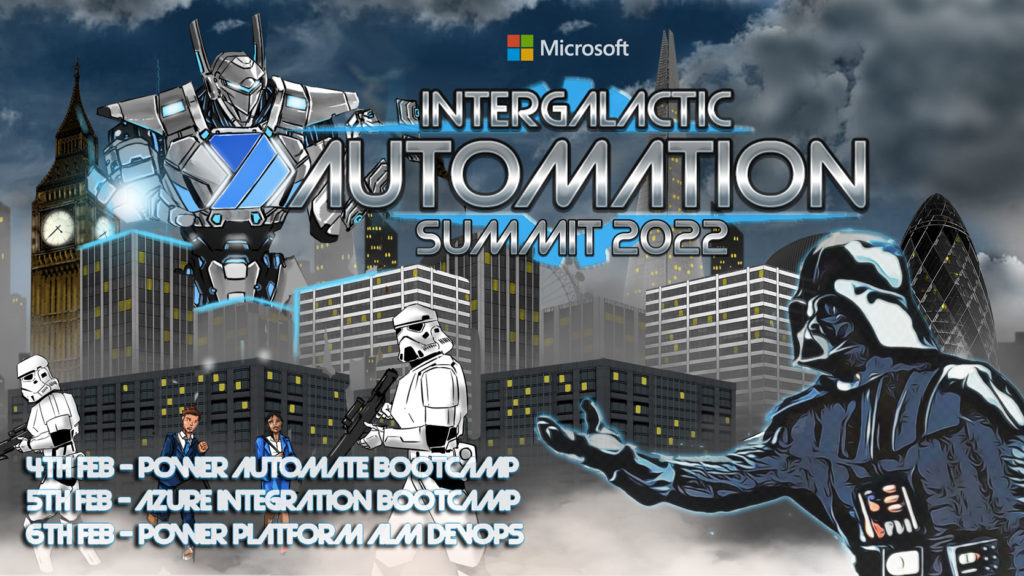
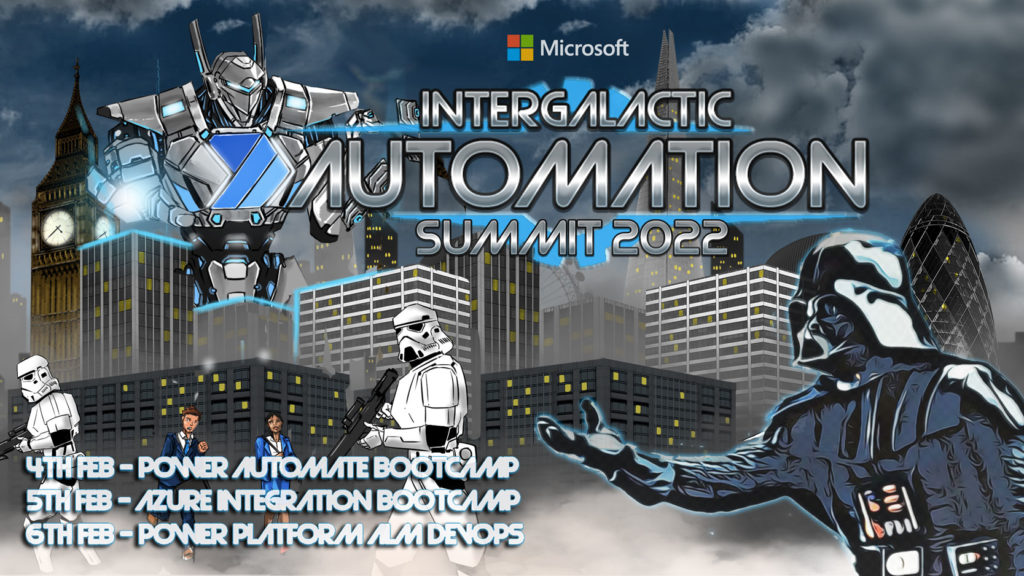
As part of the Intergalactic Automation Summit 2022 online event organized by the Power Community that is taking place between 4-6th February 2022:
4th Feb- Power Automate Bootcamp
5th Feb- Azure Integration Bootcamp
6th Feb- Power Platform ALM DevOps
All of these events are free! And you can register here.
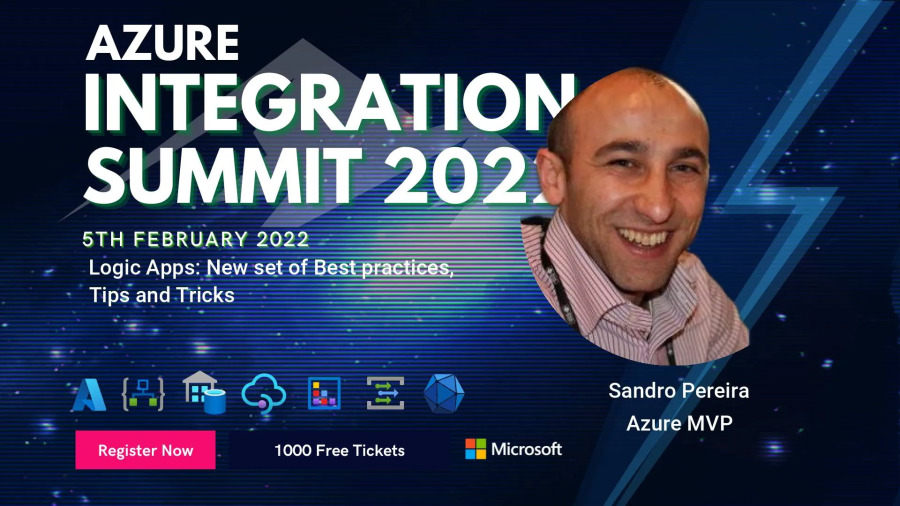
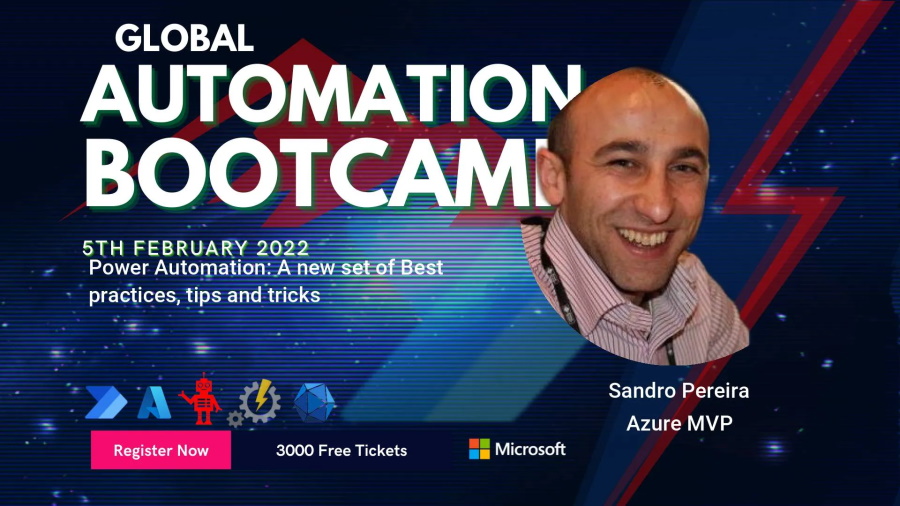
I choose to submit a session to the Azure Integration Bootcamp, and I’m honored to be accepted as a guest speaker on a session about Logic Apps: A new set of Best practices, tips and tricks. My session will take place at 11:00 am according to GMT/UTC.
Logic Apps: A new set of Best practices, tips and tricks
As I mentioned before, my session will be all about best practices and small tips and tricks that we can apply to our Logic Apps flows. For those reasons, I would like to invite you to join me at the Azure Integration Bootcamp virtual event on Saturday, February 5, 2022.
Session name: Logic Apps: A new set of Best practices, tips and tricks
Abstract: A brand new set of tips and tricks and best practices that you should know for being more productive and building more reliable and effective Logic Apps. This is not an introduction session anymore. In this session, we will go through a list of 10 new best practices, tips, and tricks addressing advanced topics like deployment, dynamic connectors configurations, etc.
Join us and reserve your presence at the Azure Integration Bootcamp virtual event on Saturday, February 5, 2022, it is free!
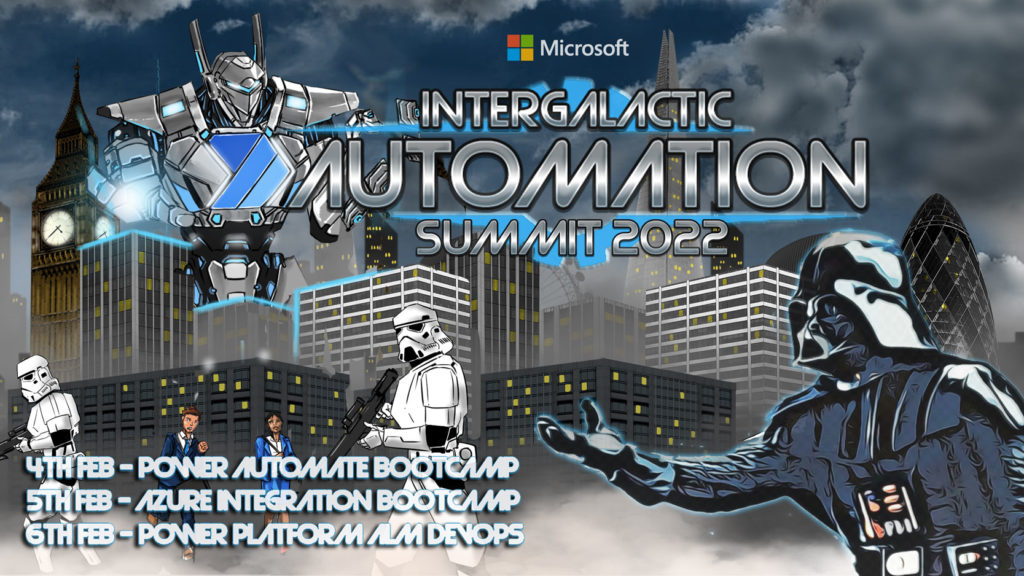
As part of the Intergalactic Automation Summit 2022 online event organized by the Power Community that is taking place between 4-6th February 2022:
4th Feb- Power Automate Bootcamp
5th Feb- Azure Integration Bootcamp
6th Feb- Power Platform ALM DevOps
All of these events are free! And you can register here.
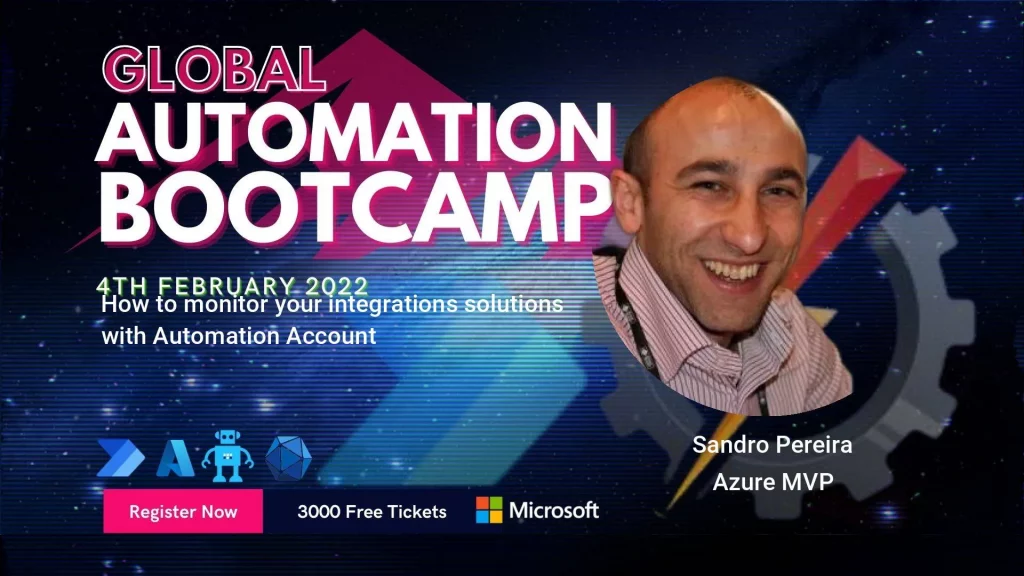
I choose to submit a session to the Global Automation Bootcamp, and I’m honored to be accepted as a guest speaker on a session about How to monitor your integrations solutions with Automation Account. My session will take place at 05:00 pm according to GMT/UTC.
How to monitor your integrations solutions with Automation Account
In this session, we will address how you can monitor your integrations solutions using Azure Integration Account running PowerShell Runbooks and Logic Apps to notify inconsistencies in your solutions. For those reasons, I would like to invite you to join me at the Global Automation Bootcamp virtual event on Friday, February 4, 2022.
Session name: How to monitor your integrations solutions with Automation Account
Abstract: In this session, we will address how you can monitor your integrations solutions using Azure Integration Account running PowerShell Runbooks and Logic Apps to notify inconsistencies in your solutions.
Join us and reserve your presence at the Global Automation Bootcamp virtual event on Friday, February 4, 2022, it is free!
As part of the Intergalactic Automation Summit 2022 online event organized by the Power Community that is taking place between 4-6th February 2022:
4th Feb- Power Automate Bootcamp
5th Feb- Azure Integration Bootcamp
6th Feb- Power Platform ALM DevOps
All of these events are free! And you can register here.
I choose to submit a session to the Power Automate Bootcamp, and I’m honored to be accepted as a guest speaker on a session about Power Automation: A new set of Best practices, tips and tricks. My session will take place at 05:00 pm according to GMT/UTC.
Power Automation: A new set of Best practices, tips and tricks
As I mentioned before, my session will be all about best practices and small tips and tricks that we can apply to our Power Automate flows. For those reasons, I would like to invite you to join me at the Power Automate Bootcamp virtual event on Friday, February 4, 2022.
Session name: Power Automation: A new set of Best practices, tips and tricks
Abstract: A brand new set of tips and tricks and best practices that you should know for being more productive and building more reliable and effective Power Automate flows. This is not an introduction session anymore. Instead, this session will go through a list of 10 new best practices, tips, and tricks addressing advanced topics like deployment, dynamic connectors configurations, etc.
Join us and reserve your presence at the Power Automate Bootcamp virtual event on Friday, February 4, 2022, it is free!
Today, we are going over another real scenario, this time from one of our PowerBI Robots clients. For those unfamiliar with it, PowerBI Robots is part of DevScope’s suite of products for Microsoft Power BI. It automatically takes high-resolution screenshots of your reports and dashboards and sends them anywhere to an unlimited number of recipients (any users and any devices), regardless of being in your organization or even having a Power BI account.
Challenge
The COVID-19 pandemic massified remote work, and one of our PowerBI Robots clients asked us for a way to start receiving high-resolution screenshots of their reports and dashboards. On top of the devices at the client’s facilities (mainly TVs), these screenshots should also be available on a Microsoft Teams Channel where they could be seen by all users with access to it. PowerBI Robots allows users to “share” high-resolution screenshots of Power BI reports and dashboards in many ways, but it didn’t have this capability out-of-the-box, so we proactively introduced it using Azure Integration Services
This proof-of-concept will explain how you can extend the product’s features by making use of PowerBI Robots’ out-of-the-box ability to send a JSON message to an HTTP endpoint and then using Azure Integration Services such as Azure Blog Storage, Azure File Storage, Logic Apps, or even Power Platform features like Power Automate to share these report or dashboard images on platforms like Teams, SharePoint or virtually everywhere.
Create Blob Storage
In theory, we could send an image in base64 directly to Teams, but the problem is that messages on Teams have a size limit of approximately 28KB. This encompasses all HTML elements such as text, images, links, tables, mentions, and so on. If the message exceeds 28KB, the action will fail with an error stating: “Request Entity too large“.
To avoid and bypass this limitation, we have to use an additional Azure component to store the Power BI report images provided by PowerBI Robots. And to do that, we can choose from among resources such as:
Azure Blob Storage: Azure Blob storage is a feature of Microsoft Azure. It allows users to store large amounts of unstructured data on Microsoft’s data storage platform. In this case, Blob stands for Binary Large Object, which includes objects such as images and multimedia files.
Azure File Storage: Azure Files is an Azure File Storage service you can use to create file-sharing in the cloud. It is based on the Server Message Block (SMB) protocol and enables you to access files remotely or on-premises via API through encrypted communications.
Or even a SharePoint library, where you can store images and many other types of files.
We chose to use blob storage for its simplicity and low cost for this POC.
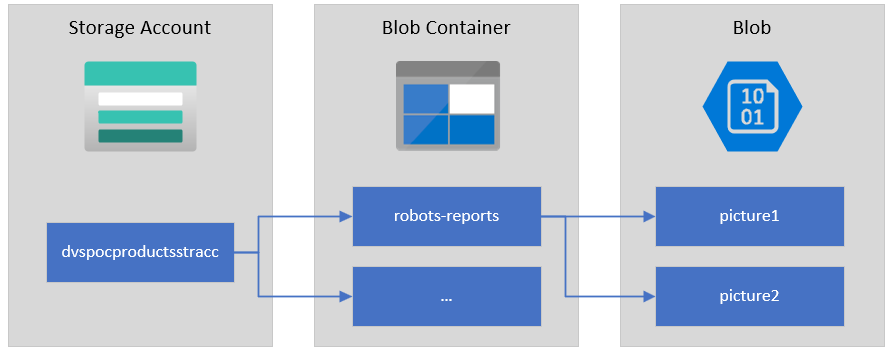
To start, let’s explain the structure of Azure Blob storage. It has three types of resources:
The storage Account
A container in the storage account
A blob
If you don’t have a Storage Account yet, the first step is to create one, and for that, you need to:
From the Azure portal menu or the Home page, select Create a resource.
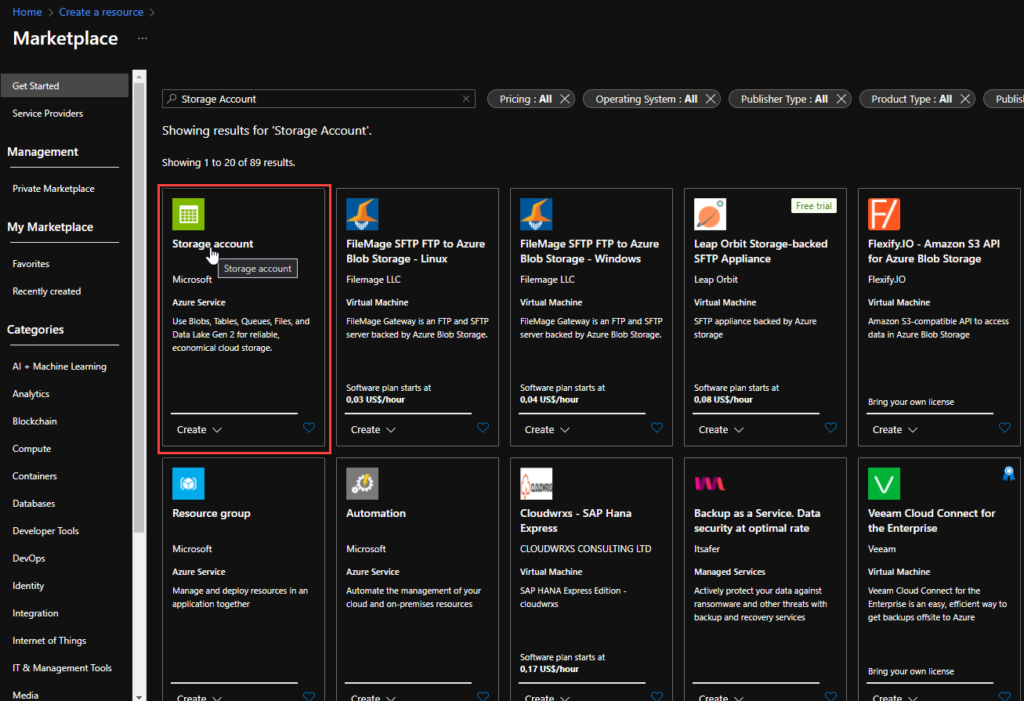
On the Create a resource page, on the search type Storage account and from the list, select Storage account and click Create.
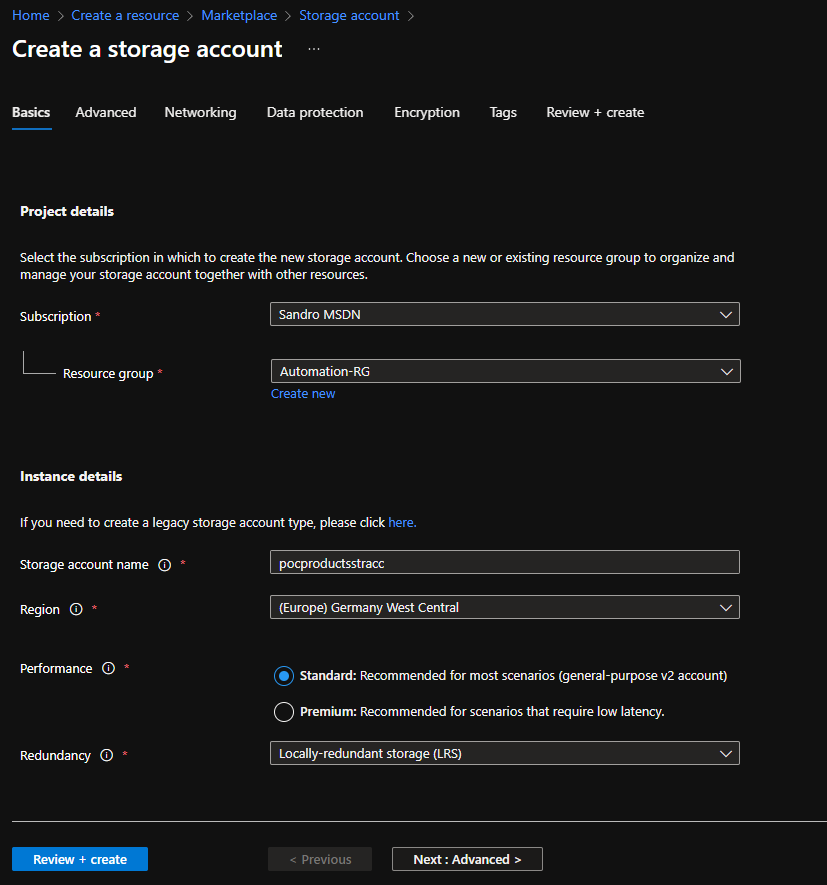
On the Create a storage account Basics page, you should provide the essential information for your storage account. After you complete the Basics tab, you can choose to further customize your new storage account by setting options on the other tabs, or you can select Review + create to accept the default options and proceed to validate and create the account:
Project details
Subscription: Select the subscription under which this new function app is created.
Resource Group: Select an existing Resource Group or create a new one in which your function app will be created.
Instance details
Storage account name: Choose a unique name for your storage account.
Storage account names must be between 3 and 24 characters in length and may contain numbers and lowercase letters only.
Region: Choose a region near you or near other services your functions access.
Note: Not all regions are supported for all types of storage accounts or redundancy configurations
Performance: Standard or Premium Select
Standard performance for general-purpose v2 storage accounts (default). This type of account is recommended by Microsoft for most scenarios.
Select Premium for scenarios requiring low latency.
Redundancy: Select your desired redundancy configuration.
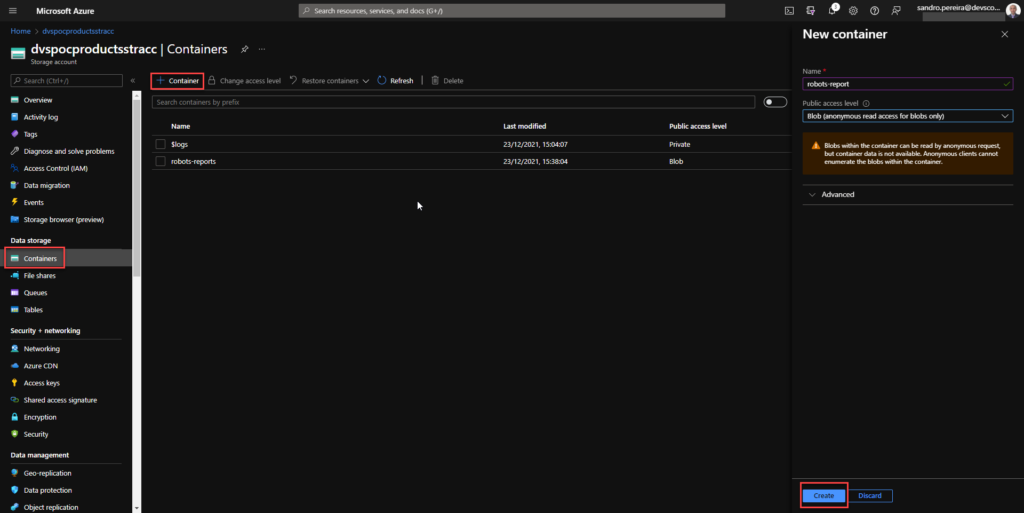
Now that we have the storage account created, we need to create our Blob Container. And for that we need:
In the left menu for the storage account, scroll to the Data storage section, then select Containers.
On the Containers page, click on + Container button.
From the New Container window:
Enter a name for your new container. You can use numbers, lowercase letters, and dash (-) characters.
Select the public access level to Blob (anonymous read access for blobs only).
Blobs within the container can be read by anonymous request, but container data is not available. Anonymous clients cannot enumerate the blobs within the container.
Click Create to create the container.
Create a Logic App
PowerBI Robots is capable of sending a JSON request with all the information regarding a configured playlist:
To receive and process requests from PowerBI Robots, we decided to use and create a Logic App, which is a cloud-based platform for creating and running automated workflows that integrate your apps, data, services, and systems. To simplify the solution, we will also use the Azure Portal to create the Logic App.
From the Azure portal menu or the Home page, select Create a resource.
In the Create a resource page, select Integration > Logic App.
On the Create Logic App Basics page, use the following Logic App settings:
Subscription: Select the subscription under which this new Logic App is created.
Resource Group: Select an existing Resource Group or create a new one in which your Logic app will be created.
Type: The logic app resource type and billing model for your resource. In this case, we will be using Consumption.
Consumption: This logic app resource type runs in global, multi-tenant Azure Logic Apps and uses the Consumption billing model.
Standard: This logic app resource type runs in single-tenant Azure Logic Apps and uses the Standard billing model.
Logic App name: Your Logic App resource name. The name must be unique across regions.
Region: The Azure datacenter region where to store your app’s information. Choose a region near you or near other services your Logic app access.
Enable log analytics: Change this option only when you want to enable diagnostic logging. The default value in No.
When you’re ready, select Review + Create. Then, on the validation page, confirm the details you provided, and select Create.
After Azure successfully deploys your app, select Go to resource. Or, find and choose your Logic App resource by typing the name in the Azure search box.
Under Templates, select Blank Logic App. After selecting the template, the designer now shows an empty workflow surface.
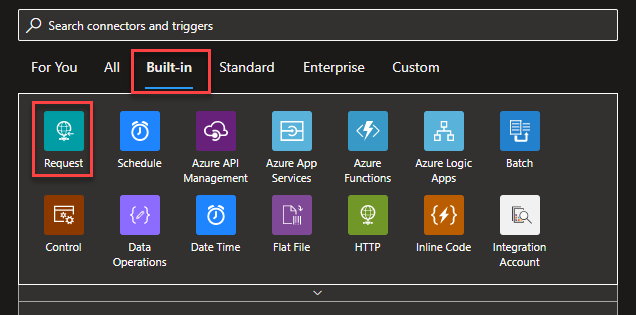
In the workflow designer, under the search box, select Built-In. Then, from the Triggers list, select the Request trigger, When a HTTP request is received.
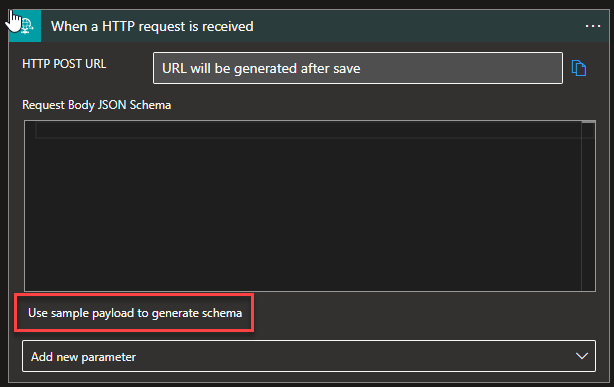
For us to tokenize the values of the message we are receiving from the PowerBI Robots, we can, on the Request trigger, click on Use sample payload to generate schema
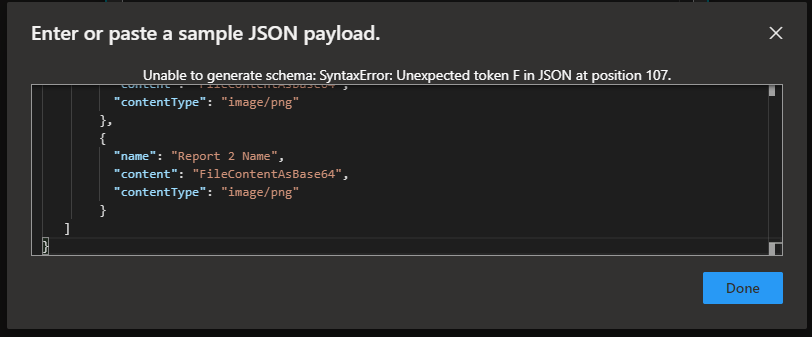
And copy the JSON message provided earlier to the Enter or paste a sample JSON payload window and then click Done.
Under the Request trigger, select New step.
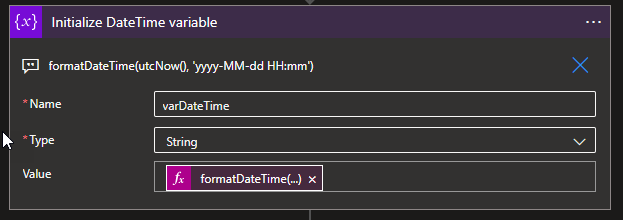
Select New step. In the search box, enter Variables, and from the result panel select the Variables, and choose the Initialize variable action and provide the following information:
Name: varDateTime
Type: String
Value: Select Expression and add the following expression formatDateTime(utcNow(), ‘yyyy-MM-dd HH:mm’)
Note: this variable will be used later in the business process to provide the data in a clear format on the message to be sent to the Teams channel.
Under the Request trigger, select New step.
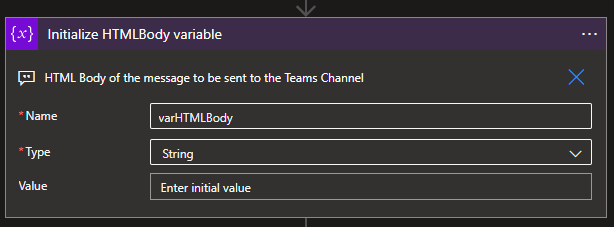
Select New step. In the search box, enter Variables, and from the result panel select the Variables, and choose the Initialize variable action and provide the following information:
Name: varHTMLBody
Type: String
Value: (Empty)
Note: this variable will be used later in the business process to dynamically generate the message to be sent to the Teams channel in an HTML format.
Select New step. In the search box, enter Blob, and from the result panel select the Azure Blob Storage and choose the Create blob (v2)action.
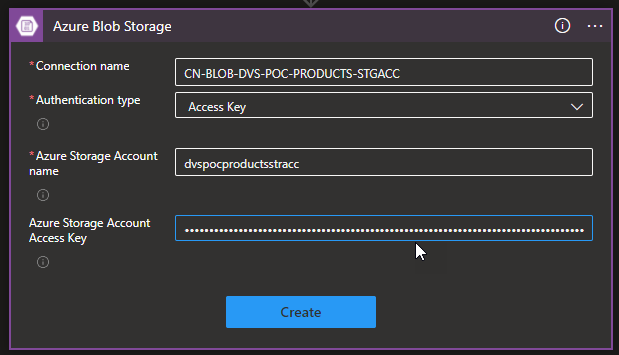
If you don’t have yet a connection create you first need to create the connection by setting the following configurations and then click Create:
Connection name: Display connection name
Authentication type: the connector supports a variety of authentication types. In this POC, we will be using Access Key.
Azure Storage Account name: Name of the storage account the connector we create above. We will be using dvspocproductsstracc.
Azure Storage Account Access Key: Specify a valid primary/secondary storage account access key. You can get these values on the Access keys option under the Security + networking section on your storage account.
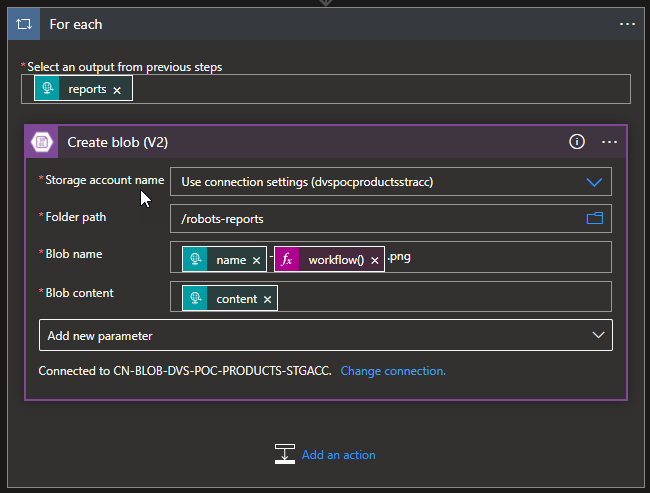
Then provide the following information:
Storage account name: Select from the dropdown list the storage account. The default should be Use connection settings (dvspocproductsrracc)
Folder path: navigate to the folder /robots-reports
Blob name: Dynamic set the name of the file to be created. To avoid overlap we decide to use the unique workflow id of the message as part of the name of the report we receive on the source message:
Blob content: the Base64 content we receive on the source message.
Note: by setting the name or the content on the Create blob action, this will automatically add a For Each loop statement on our business flow since these fields can occur multiple times inside the source message. And this is correct and what we want.
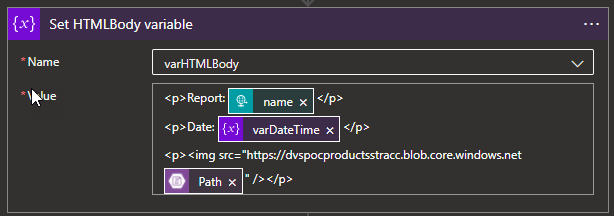
Select New step. In the search box, enter Variables, and from the result panel select the Variables, and choose the Set variable action and provide the following information:
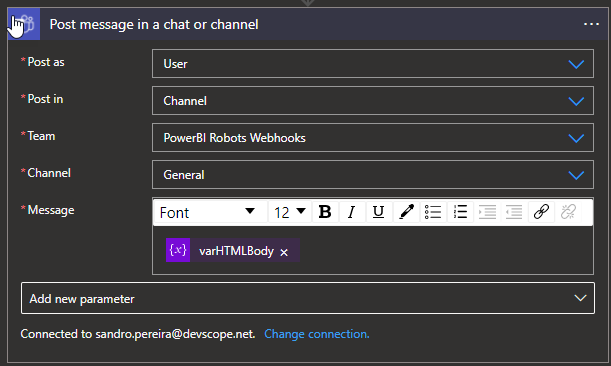
And finally, select New step. In the search box, enter Teams, and choose from the result panel the Microsoft Teams, choose the Post message in a chat or channel action and provide the following information:
Post as: Select User
Post in: Select Channel
Team: Select the Team, in our case PowerBI Robots Webhooks
Channel: Select the Team channel, in our case General
Message: place the message we create above by using the varHTMLBody
Note: if you don’t have yet created a Teams Connector, you need to Sign in using the account that will be making these notifications.
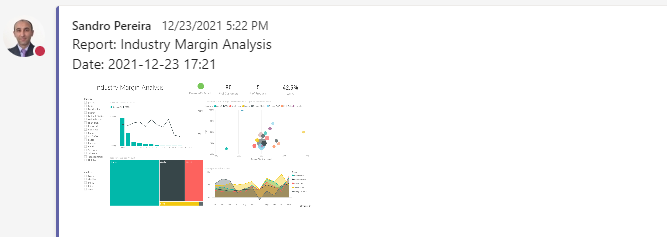
As a result, once we receive a new request from the PowerBI Robots, will be a fancy message on teams with a thumbnail of the report:
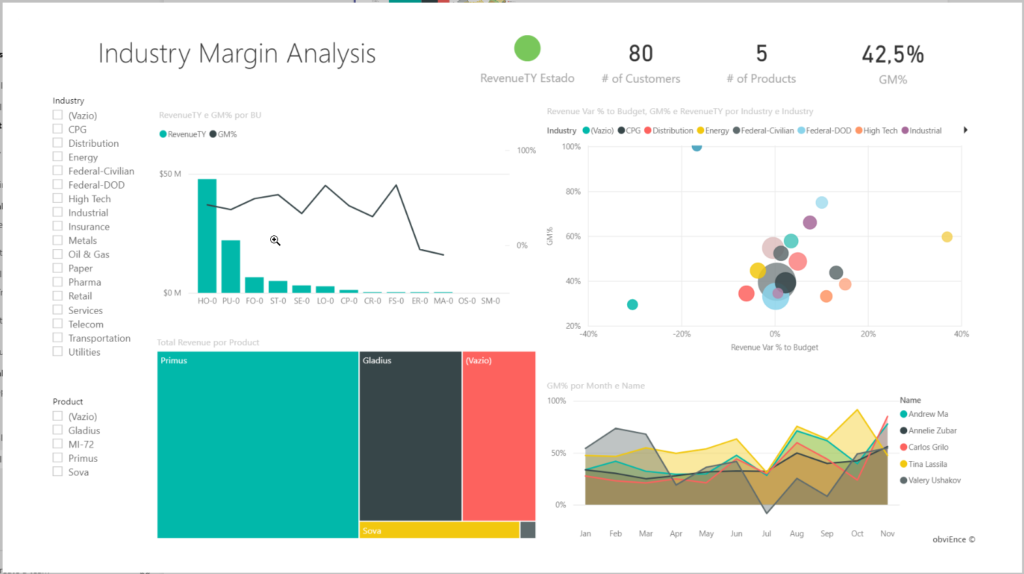
You can click on it and see it in full size:
More About PowerBI Robots?
PowerBI Robots automatically takes screenshots of your Microsoft Power BI dashboards and reports and sends them anywhere, to an unlimited number of recipients. Simply tell PowerBI when and where you want your BI data, and it will take care of delivering it on time.
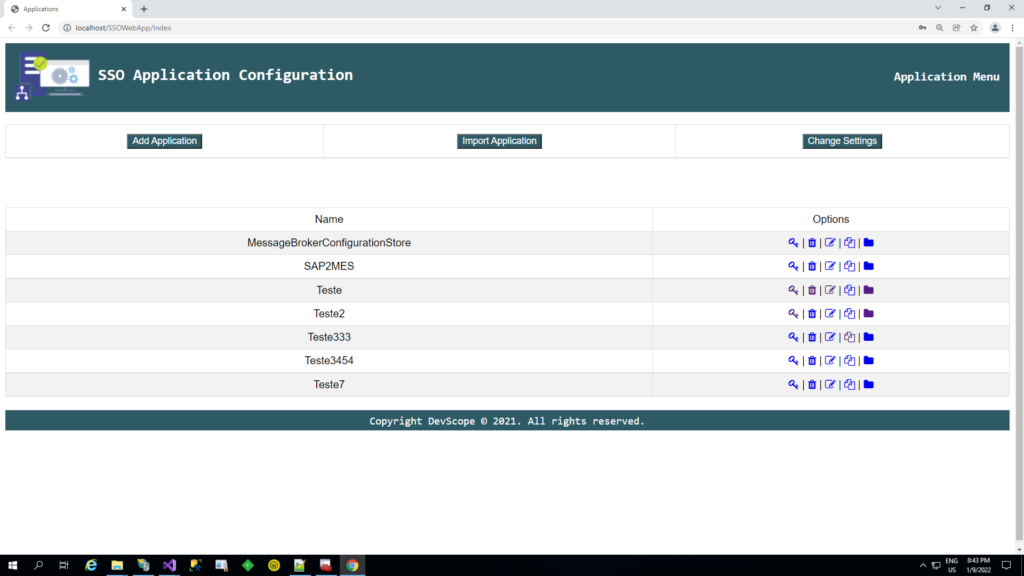
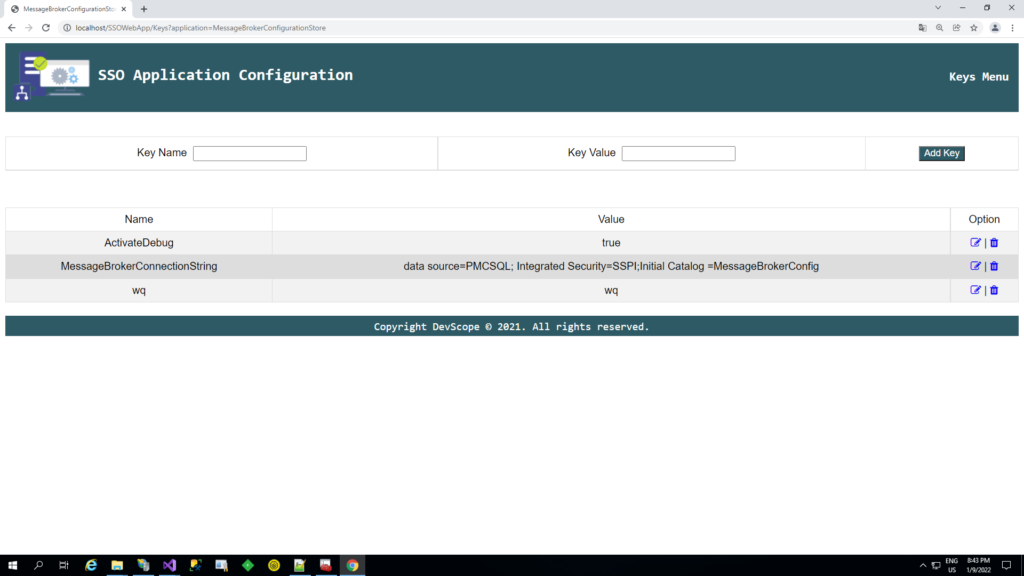
It’s been some time since I created the BizTalk ServerSSO Application Configuration tool. The tool is available for several versions of BizTalk Server. It provides the ability to add and manage applications, add and manage key-value pairs in the SSO database, and import and export configuration applications to be deployed to different environments.
However, and although I love this tool, there is a significant limitation. It is a Windows application tool. So, most of the time, we need remote access to the BizTalk Server machines to access the tool to be able to read or change these values inside the SSO Applications.
To bypass this limitation, we create a Web version of this tool. The tool has almost the same features available as the traditional windows tool:
You can securely export and import Application configurations and it is compatible with MSFT SSO snap-in;
You can duplicate Applications (copy and past);
You can rename Applications;
You can easily add new key-values;
You can edit key-values;
Other versions
This tool is also available in the format of Windows Application for the following BizTalk Server versions: